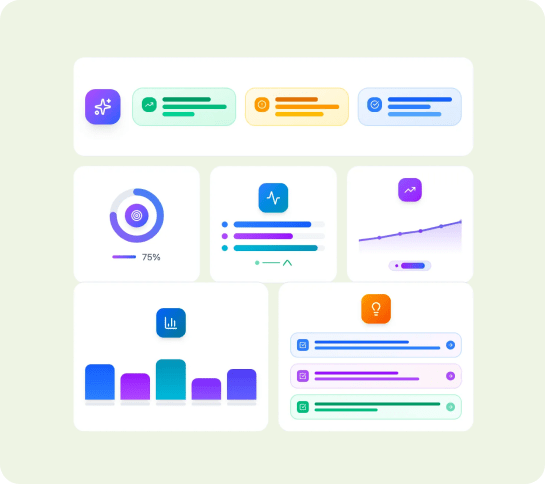

AI Decision Support System for Business Growth
Real-Time Assistance
AI Decisioning
Seamless Support
Instant KPI Monitoring
Security Ensured
Analytics Looks Back while
AI DSS Leads Forward
AI Assisted Business Intelligence
Traditional analytics
Static dashboards
Manual analysis
Heavy analyst dependency
Long KPI answer times
Digitraly AI DSS
Real-time AI KPI dashboards
Instant AI augmented insights
Self-service insights for everyone
Instant KPI query responses
How the Digitraly
AI Decision Support System Works
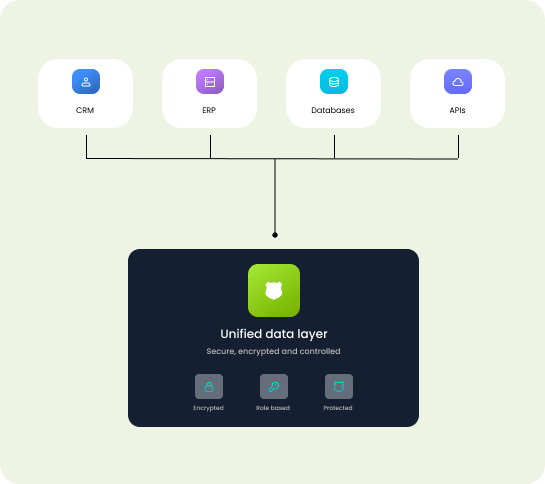
1. Connect Your Data
Integrate CRMs, ERPs, databases, and APIs into one secure, unified, decision-ready layer with encryption and role-based access built in.
2. Ask in Natural Language
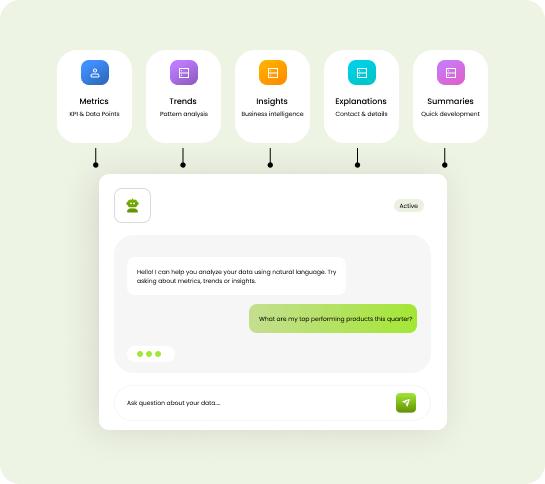
Ask questions like “Why is revenue down?” or “Predict Q4” and get instant AI answers.
3. Get Instant AI Insights
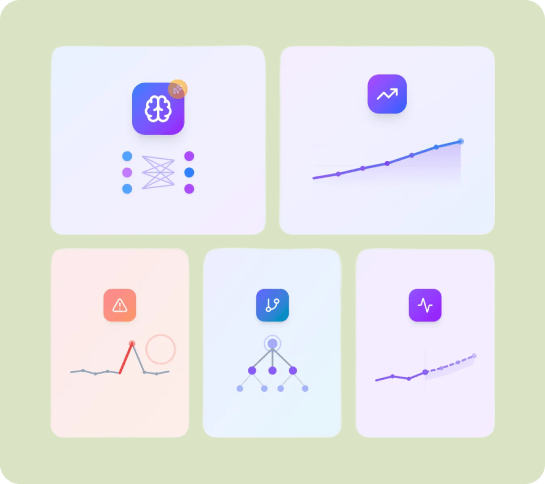
Automatic trends, anomalies, root-cause analysis, and forecasts — explained clearly.
4. Automate Decisions
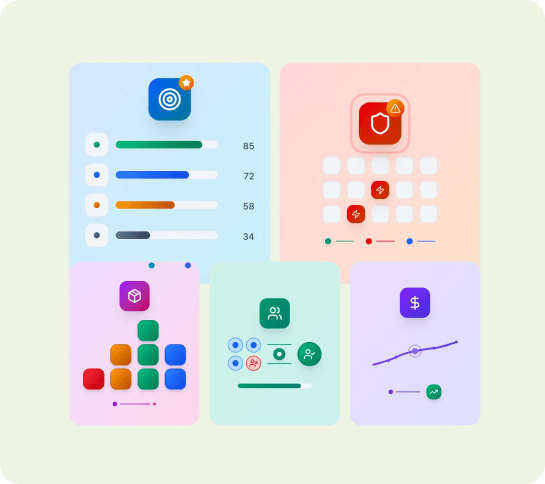
AI workflows handle lead scoring, fraud alerts, inventory optimization, churn prevention, and more.
5. Pre-Meeting Reports
DSS sends concise AI-generated summaries with KPIs and recommendations.
Core Capabilities of Digitraly AI DSS
10x
Faster decision-making72%
Reduction in BI & reporting workload100%
Employee empowerment for decision making01
Intelligent Layer Powering Every DecisionTURN INSIGHTS INTO ACTION—FAST!
Turn Your Data Into Decisions
Starting Today
All You Need to Know
Frequently Asked
Questions
An AI Decision Support System (AI DSS) uses AI, analytics, and automation to help organizations analyze data, monitor KPIs, and make optimal decisions.
It blends AI-augmented analytics, decision intelligence AI, and decision automation into a single platform.
Absolutely — natural-language queries make it simple.
Yes — SQL databases, CRMs, ERPs, warehouses, APIs, spreadsheets, and more.
It connects your data sources, analyzes them with AI, and delivers real-time insights, predictions, and recommended actions. Users ask questions in natural language, and the system instantly responds with decision ready intelligence.
It speeds up decision making, reduces manual analytics work, empowers every employee with self-service insights and provides proactive recommendations instead of static dashboards.
Start by identifying priority use cases, connect your data sources, define core KPIs, deploy natural-language analytics, and gradually add automated decision workflows.
It plugs into CRMs, ERPs, databases, APIs, and collaboration tools. AI insights can flow into current processes through alerts, dashboards, automations, and role-based access controls without disrupting existing workflows.